🍁 Welcome to CloudNorth Canada FREE SHIPPING ACROSS CANADA Vape On! 🍁
WE ARE WHERE CANADA BUYS THEIR VAPES Buy Any Product On Site — Get Up To 35% Off Plus An Additional 5% Off Your Order @ Checkout
CloudNorth 🍁VAPE ACROSS CANADA

More Americans oppose police license plate cameras than support them: survey

2024 02 17 14 59 57 1536x138


The growing backlash against surveillance companies like Flock may have reached a tipping point. A new survey has found that more Americans oppose these surveillance cameras than support it.

According to a new YouGov survey of 20,000 people across the U.S. that was shared exclusively with The Washington Post, 46% of respondents opposed the company’s surveillance cameras in their communities, while 38% supported them. This is a reversal from last year, when the majority of survey respondents said they were in favor.

Flock is one of the more visible surveillance companies, operating more than 120,000 license plate readers across the U.S. that can track the whereabouts of vehicles. The company has been embroiled in controversy following reports of police abusing the cameras’ surveillance, which resulted in dozens of U.S. communities rejecting Flock’s cameras or cancelling their contracts amid privacy concerns.

The survey also reported that more respondents said the surveillance would not make them feel any safer.

When reached by TechCrunch, Flock claimed there was wide support for its surveillance technology, but acknowledged that “support isn’t unconditional,” and touted the rollout of its recent safeguards. Critics, like the ACLU, have said the company’s new safeguards amount to little, and Flock remains a major threat to civil liberties.

Amid the intensifying backlash, Flock CEO Garrett Langley last week called for a “compromise” between surveillance and privacy, following a rise in vandalism targeting Flock cameras.

Salts 1536x469


Source link

Guess Which Bravo Star This Girl Turned Into!

2024 02 17 14 59 57 1536x138


Before this sweet lil’ girl in a life jacket became a Bravo-lebrity, she was just swimming in Azusa, California, cheerleading and pretending to be Britney Spears, signing autographs.

“It’s All Happening” is one of her iconic quotes (and tattoos), and you best believe she’s “Good As Gold.”

Salts 1536x469


Source link

Top 5 Hacks For Dry Herb Vaporizers


These are the top 5 hacks for your dry herb vape. Join Andreas as he goes through them one by one.

Are you always doing all 5? Stay ahead, not behind – with these hacks that come from years of experience you’ll be sure to always get the most out of your device. Be it a Mighty, or a Solo 3 or an XMAX V3 PRO, or anything! The point is these hacks are valid for pretty much for all the dry herb vaporizers out there.

All the best,
Vapefiend

All our socials ( our website to buy anything you need, discord community with amazing like minded people & our instagram to keep up to date with the latest!) – https://linktr.ee/vapefiend

Music: https://www.bensound.com
Artist: Nick Petrov
License code: QNNFJQIXVT4GNTHA

source

Judge Once Again Bars Postal Service From Restricting Mail-In Vote

2024 02 17 14 59 57 1536x138


A federal judge on Thursday once again temporarily prohibited the U.S. Postal Service from carrying out a plan to restrict mail-in voting, put in place after a directive from President Trump.

Judge Indira Talwani, a Federal District Court judge in Massachusetts, had cleared the way for the Postal Service to move forward just the day before. But on Thursday, she issued a new order concluding that the agency’s plan, released late on Friday, appeared to overstep its legal mandate and could spark chaos by changing rules fewer than 70 days before an election.

She wrote that a group of Democratic-led states that had sued “face irreparable harm where they are required to comply with a likely unconstitutional regulation for which compliance is practically impossible as to the 2026 midterm elections, now little more than two months away.”

“Most plaintiff states have already ordered their mail ballots, and some are required by state law to send them to eligible voters as early as next week,” she added.

She wrote that while the Supreme Court had “admonished” her on Monday that the Postal Service had not finalized any changes when the groups sued initially, making court action premature, the stakes had changed since then because of the step the agency took Friday to formalize its plan.

Her ruling marked the third court decision on the issue in less than a week, a whipsaw of action that threatened to confuse voters. But each delay has reduced the administration’s chances of clearing the legal hurdles to execute its logistically complicated mail-in ballot plan before the November election. She blocked the rule from taking effect for 14 days, and she had previously scheduled a hearing to discuss the legality of the rule on Sept. 3.

In her order, Judge Talwani explained that the prospect of the new rule suddenly taking effect carried “significant risk of their members’ disenfranchisement” for voting rights organizations, which had also sued, along with the states.

She ticked through a list of requirements that state election officials would be required to meet to ensure delivery of ballots, including receiving the agency’s approval for new envelope designs and submitting voters’ information into an online portal run by the Postal Service.

“Where a state or local election official does not obtain envelope and return envelope design approval, or does not upload voter information, or does not include unique intelligent mail bar codes on ballot envelopes, the U.S.P.S. will not mail ballots to voters,” she concluded.

The nonprofit groups behind one of the lawsuits said in a joint statement that they welcomed the court’s order. “This is an important step towards affirming the public’s confidence in the system of mail ballots, which thousands of eligible voters nationwide rely on as a core method of democratic participation,” the groups said in the statement.

In March, President Trump issued an executive order that required the Department of Homeland Security to create and circulate state-by-state citizenship lists to state officials. It further urged states to provide the U.S. Postal Service with their own lists of voters eligible to cast ballots by mail.

Multiple lawsuits were filed challenging the order, arguing that Congress and the states set rules for elections, not the executive branch. The challengers also argued that no federal law gives the Postal Service the power to make those kinds of election-related rules.

On Monday, the Supreme Court ruled that one suit, brought by a group of Democratic-led states, was premature because the administration had not started implementing its plans.

But late Friday, just before the court ruled, the Postal Service formally published a new plan to comply with the executive order. Under that plan, the service would not deliver mail ballots in states that do not share voter data with the agency and would only deliver ballots that meet certain criteria.

Lawyers for the Trump administration and the groups challenging the rule continue to clash over a straightforward issue: Whether or not the Postal Service’s plan would mean the agency would be taking on a new role verifying voters and potentially rejecting ballots in the midterm election in November.

In a filing on Thursday, the Postal Service denied that its proposal left room for the service to second-guess states on which voters were eligible to cast a ballot.

“U.S.P.S. will not scrutinize those decisions or alter that information in any way — instead leaving it entirely up to the states to accurately and lawfully identify its residents who are eligible to vote by mail,” the filing said. “The Postal Service will not determine voter eligibility, ballot content, mailing or receipt deadlines, or ballot-counting procedures.”

Instead, it described the changes as minor logistical improvements and streamlining, such as requiring voters to submit their addresses ahead of time to improve processing. It said the changes were designed “as a matter of the Postal Service’s own judgment.” Lawyers for the service argued it is authorized to adopt mail rules under statutes adopted by Congress.

A spokesman for the Postal Service did not immediately respond to a request for comment.

The challengers argue that the Postal Service rule is an unconstitutional violation of the separation of powers, allowing the executive branch to intrude into elections. They say that no federal law permits such action by the agency, and they assert that the Trump administration’s actions are likely to sow confusion among voters and to lead to disenfranchisement.

The agency has said that it would not try to impose the new requirements for the 2026 elections, unless explicitly allowed to by the courts.

A series of lawsuits in Massachusetts and the District of Columbia by different groups have challenged Mr. Trump’s effort to discredit and erect obstacles to mail-in voting. The lawsuits have challenged both Mr. Trump’s executive order and the Postal Service rule, focusing on their implementation this year and beyond.

Adam Sella contributed reporting.

Salts 1536x469


Source link

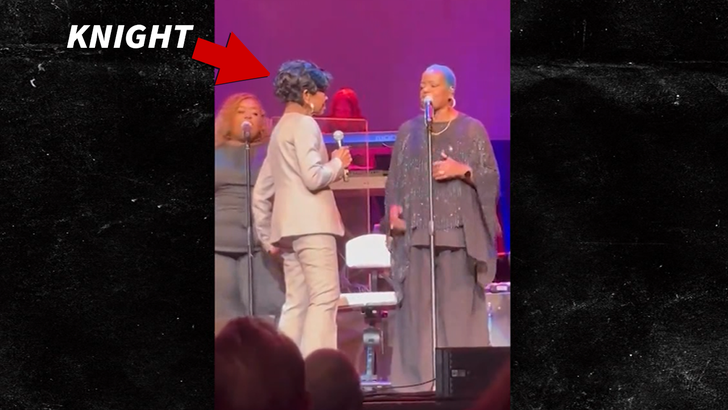
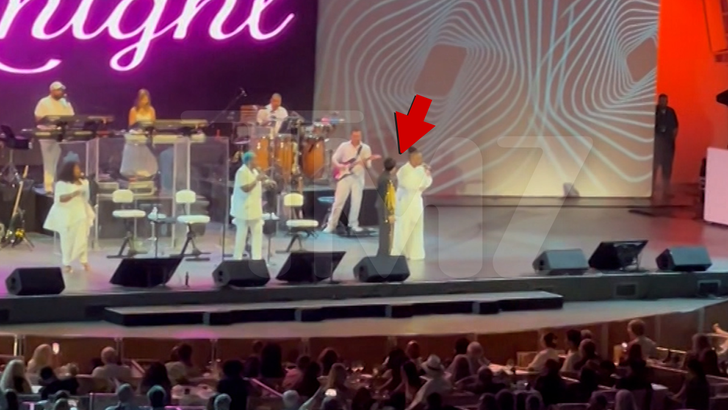
Gladys Knight Cutting Back After Claims She’s Being Forced to Tour

2024 02 17 14 59 57 1536x138


Gladys Knight
‘Shameful’ She’s Touring While Dazed, Confused
… Some Tour Staff Outraged

Published


Salts 1536x469


Source link

Are rosin vapes any good?


source