🍁 Welcome to CloudNorth Canada FREE SHIPPING ACROSS CANADA Vape On! 🍁
WE ARE WHERE CANADA BUYS THEIR VAPES Buy Any Product On Site — Get Up To 35% Off Plus An Additional 5% Off Your Order @ Checkout
CloudNorth 🍁VAPE ACROSS CANADA

Benchmark’s full partnership joins the main stage at Disrupt 2026

2024 02 17 14 59 57 1536x138


What does one of Silicon Valley’s most successful venture firms think founders are getting wrong? At TechCrunch Disrupt 2026, we’re putting all five Benchmark general partners on one stage to find out. Jack Altman, Peter Fenton, Chetan Puttagunta, Everett Randle and Eric Vishria will come together for this main stage session, “What We Believe Now” – the first time the entire current Benchmark partnership has appeared together on the Disrupt Stage in San Francisco.

Rather than another conversation about where venture capital has been, the focus is on where it goes next: where the next generation of startups will come from, which assumptions founders should reconsider, and which opportunities the partners believe are still hiding in plain sight. And 2026 is an especially interesting year to ask them.

TechCrunch Disrupt 2026 Benchmark
Image Credits:TechCrunch

Benchmark has spent decades building a reputation around concentrated early-stage investing. This year, it made one of the biggest changes in its own playbook – raising approximately $2 billion across a $750 million flagship fund and its first $1.25 billion growth fund.  The market changed. Benchmark changed with it. Now we want to know what the firm thinks will happen next.

Sit front and center to get tomorrow’s venture insights at Disrupt. Register now to save up to $200 before prices increase on September 25, 11:59 p.m. PT. Save an additional 30% on group passes for four or more.

Venture has plenty of capital. Conviction is harder to find. 

AI has reshaped the venture market with extraordinary speed. According to the OECD, AI companies captured 61% of global venture capital investment in 2025 – $258.7 billion of $427.1 billion invested overall. Yet that capital was far from evenly distributed: deals worth more than $100 million represented roughly 73% of total AI investment value. That creates a strange environment for founders.

There is huge appetite for technology businesses, alongside growing competition for a relatively small number of companies investors believe can become category leaders. Is the next billion-dollar company another AI application, or is the application layer already overcrowded? Does defensibility sit in models, infrastructure, proprietary data or distribution? Are some of the best businesses being overlooked because everyone is chasing the same themes? And when founders can build products faster than ever, what actually makes one company investable?

There probably won’t be complete agreement onstage. That’s the point. Hear this complex discussion among five VC heavyweights on the Disrupt Stage. Register now to save up to $200 before prices increase on September 25.

Five investors on the Disrupt Stage, very different routes to the partnership

Benchmark’s partnership brings together experience from founding companies, backing enterprise software, investing in frontier technology, and helping businesses navigate IPOs and acquisitions.

Jack Altman joined Benchmark this year after founding Lattice and subsequently building his own venture firm, Alt Capital. Before joining Benchmark, Alt Capital had raised $425 million across its early-stage investing activities. His path gives the discussion an unusually direct founder-to-investor perspective.

Peter Fenton brings one of venture’s longest track records. His investments span consumer and enterprise companies, including current AI bets such as Sierra, Digits and Sema4.ai. He has served as a director through seven successful IPOs, including Twitter, Elastic, New Relic, Zendesk and Yelp.

TechCrunch Disrupt Peter Fenton
Image Credits:TechCrunch

Chetan Puttagunta focuses on early-stage enterprise software and has backed companies including MongoDB, MuleSoft, Elastic, Modern Treasury, Legora and Stytch.

Everett Randle brings experience investing across stages and categories, with investments that include Anthropic, SpaceX, Rippling, Flock Safety, Gumloop and Chainguard.

And Eric Vishria focuses on early-stage infrastructure and enterprise software, with investments including Amplitude, Confluent, Fireworks.ai and Cerebras Systems. Before becoming an investor, he was himself a startup CEO, co-founding RockMelt before its acquisition by Yahoo.

Put those perspectives together and this session, “What We Believe Now,” becomes less about a single Benchmark thesis and more about how experienced investors disagree, update their assumptions, and decide where conviction is warranted.

Hear this session live in October and save up to $200 when you register before prices rise on September 25.

Sometimes the opportunity hiding in plain sight looks like a bad meeting

Cerebras is a useful example. Vishria recently told TechCrunch that he almost didn’t take his first meeting with the AI chip startup in 2016. Hardware was outside Benchmark’s comfort zone, and what Cerebras wanted to build looked extraordinarily difficult.

Benchmark general partner Eric Vishria, Cerebras Systems co-founder CEO Andrew Feldman
Cerebras Systems co-founder CEO Andrew Feldman (left) with Benchmark general partner Eric Vishria (right).Image Credits:Eric Vishria

By the third slide, he had changed his mind. Benchmark went on to co-lead the company’s $25 million Series A. A decade later, Cerebras went public, with Benchmark holding a 9.5% stake at the IPO.

That story encapsulates something important about venture investing. The best opportunity does not always arrive looking like the consensus winner. Sometimes it challenges the investor’s existing thesis. Sometimes the technology is too early. Sometimes the market does not obviously exist yet. And sometimes knowing when to change your mind is more valuable than being right from the beginning. Expect that kind of thinking to surface on the Disrupt Stage.

Register before September 25 to save up to $200 on your pass. Prices will increase after.

Founders should come to this Disrupt session prepared to disagree

For founders, there may be no more useful part of the session than hearing what Benchmark believes entrepreneurs are currently misreading. Not because Benchmark is automatically right, but because understanding how sophisticated investors assess markets, teams, and opportunities gives founders another way to interrogate their own assumptions.

Investors can compare those frameworks with their own. LoB leaders can see which shifts venture firms believe are durable enough to shape the companies they work for – and where capital may flow next. For students, aspiring founders, and anyone simply trying to understand where technology is heading, it’s a rare opportunity to hear five investors with very different experiences work through their ideas in the same room.

TechCrunch Disrupt audience
Image Credits:Kimberly White / Getty Images

And those ideas matter well beyond the venture industry. Investment decisions are ultimately bets about which technologies, business models, and founders have the potential to shape the next decade.

Register now to save up to $200 before they increase on September 25, 11:59 p.m. PT.

Benchmark has its bets. What are yours? Decide at TechCrunch Disrupt 2026

A lot can change in the world of tech in twelve months. AI capabilities move. Markets emerge. Categories disappear. Companies that looked inevitable suddenly don’t, while businesses few people were watching break through. Having a thesis matters. Knowing when to update it matters more.

Join Jack Altman, Peter Fenton, Chetan Puttagunta, Everett Randle and Eric Vishria on the Disrupt Stage and hear what Benchmark believes now – and what might convince them to change their minds next.

Disrupt 2026 returns to San Francisco’s Moscone West, October 13–15, bringing together more than 10,000 founders, investors, operators and innovators across six stages, roundtables, breakouts, Startup Battlefield, the Expo Hall, and more.

The next great company may already be being built. Find out where some of Silicon Valley’s most experienced investors are looking for it at TechCrunch Disrupt 2026. Register now to save up to $200 before prices increase on September 25 at 11:59 p.m. PT. Save an additional 30% if you register with a group of four or more.

TechCrunch Disrupt 2026 Stage Audience
Image Credits:Noam Galai / Getty Images

When you purchase through links in our articles, we may earn a small commission. This doesn’t affect our editorial independence.

Salts 1536x469


Source link

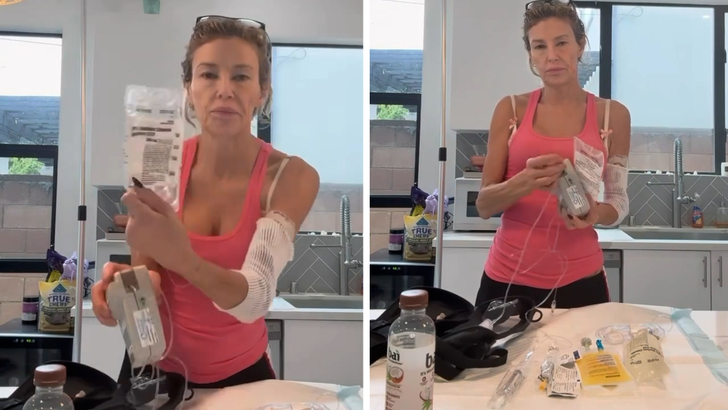
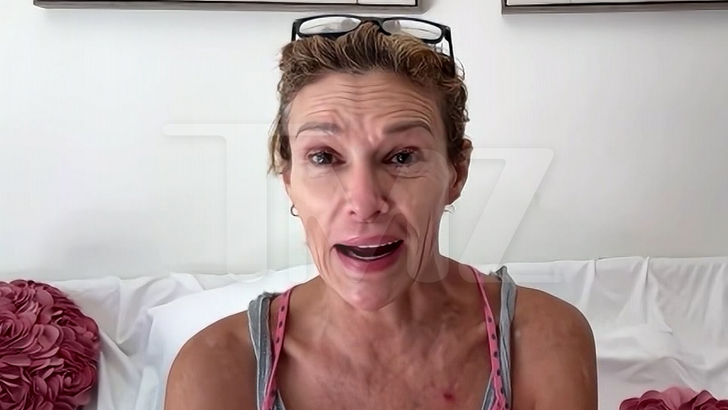
Brandi Glanville Says Health Issues Have Wiped Out Her Social Life

2024 02 17 14 59 57 1536x138


Brandi Glanville
My Health Battle Has Wiped Out My Social Life!!!

Published


Salts 1536x469


Source link

Professional Vape Tester 😵 (@machina700)


WARNING: smoking is harmful

#funny #insane #sport #viral #subscribe #usa #vape

The best channel for sport and entertainment!

For inquiries or video removal requests please contact→ MediaConquerYT@gmail.com

Disclaimer: This video is posted with the permission from the owner!

source

White House Moves to Take Control of N.I.H. Grants

2024 02 17 14 59 57 1536x138


The White House has begun drafting a new executive order that could further cement President Trump’s ability to control billions of dollars in scientific grants and expand the administration’s pressure campaign against elite universities.

Discussed at a highly contentious meeting at the White House on Friday, the order aims to create a new external committee with the power to veto awards in the National Institutes of Health’s vast research portfolio that do not conform to Mr. Trump’s political agenda, according to people with knowledge of the effort.

During the meeting, Mr. Trump repeatedly complained about his administration’s failure to bring Harvard University in particular to heel. The administration has been unable to hammer out a deal with the nation’s oldest and wealthiest university, a central plank of his broader push against “woke” ideology in higher education.

The White House has also lost a pair of lawsuits to Harvard, including one ruling that blocked cuts to the university’s existing federal research grants. The government has said it plans to appeal.

Inside the White House, some of Mr. Trump’s top lieutenants have expressed frustration about a perceived slowdown in the administration’s attempt to force conservative cultural changes on academia.

The meeting, in the Oval Office, was called in part to discuss why the N.I.H. hadn’t done enough to push the administration’s agenda on academia in general and Ivy League schools in particular, said two administration officials familiar with the planning.

The meeting was first reported by The Washington Post. Officials at the Office of Management and Budget, which is drafting the executive order, declined to comment. A spokesman for the N.I.H., Joshua Pradko, declined to discuss details of the meeting.

“N.I.H. remains committed to its mission of funding biomedical research to benefit the health of the American people,” Mr. Pradko said in a text message.

Referring to reports that Russell T. Vought, director of the O.M.B., wants to rescind N.I.H. funding, Mr. Pradko added, “There will be no rescissions to N.I.H. grant monies. All N.I.H. grant monies will be spent.”

If the order moves forward, it would mark the latest attempt by the Trump administration to usurp the scientific autonomy of the N.I.H., a $48 billion agency that distributes a majority of its budget to labs across the country for research into areas such as heart disease, cancer and infectious diseases.

Traditionally, the N.I.H. selects projects based on expert review of their scientific merit. But Mr. Trump has sought through a series of recent directives in his second term to bring that process under political review, arguing in part that the government has been funding “woke” liberal priorities.

Friday’s meeting brought to a head months of conflict between two of the attendees: Mr. Vought of the O.M.B., who wants to impose greater political control over N.I.H. grant approvals, and Dr. Jay Bhattacharya, the N.I.H. director, who is resisting those efforts, according to two people close to Dr. Bhattacharya.

Their relationship has grown so contentious that Mr. Vought had refused to meet with Dr. Bhattacharya, the people said. During the session on Friday, Mr. Vought accused the N.I.H. director of funding projects that were in conflict with administration priorities.

One of Mr. Trump’s executive orders, issued on his first day back in office, ended all administration programs involving “diversity, equity and inclusion.” It has had far-reaching effects on N.I.H. studies, including those investigating “health disparities” — why populations defined by factors like race or socioeconomic status may be prone to certain diseases or to suffer worse outcomes.

As a Stanford University economist, Dr. Bhattacharya conducted research on health disparities and has been trying to find a way to preserve N.I.H. funding for such work. In 2011, for instance, he and colleagues reported on “persistent racial disparities in survival after heart transplantation.”

The study, funded by the N.I.H., found that Black heart-transplant patients were at higher risk of death than similar white patients were.

But as N.I.H. director, Dr. Bhattacharya has also supported eliminating funding for work he regards as low-quality or ideologically driven. In a brief conversation with reporters early in his tenure, Dr. Bhattacharya said the cancellations were targeting “politicized expressions of devotion to a particular ideology” as opposed to “good science.”

The Harvard confrontation has placed Dr. Bhattacharya in an awkward position. Dr. Alan M. Garber, president of Harvard University, is his mentor and longtime friend. Both are physicians and health economists; they have authored academic papers together and remain close, according to The Harvard Crimson.

On Friday, Mr. Vought also sought access to funds for the current fiscal year that have not yet been spent. He did not succeed. The fundamental disagreement, however, appears to reflect a philosophical difference: Mr. Vought wants to cut federal spending for research; Dr. Bhattacharya does not.

Nor does Congress, which overruled Mr. Trump’s proposal to cut biomedical research spending last year.

Moreover, Dr. Bhattacharya opposes Mr. Vought’s push to give political appointees the final say over all federal spending, not just health and scientific research.

A proposed rule earlier this year would have integrated political review into the entire federal grant-making process, calling for “ending government sponsorship of gender ideology and other radical doctrines.”

The changes were widely denounced by the scientific and medical research community, and drew bipartisan rebuke in Congress, where lawmakers blocked the White House from proceeding.

The White House has issued a number of executive orders to halt scientific research into areas that conflict with administration priorities. Thousands of grants were terminated for being in conflict with these priorities.

Even before Friday’s meeting, the administration was entangled in multiple lawsuits that challenged those actions.

Last week, a class-action lawsuit was filed in California district court by the American Civil Liberties Union on behalf of scientists alleging that the N.I.H. was unconstitutionally censoring scientific research.

The lawsuit, on behalf of researchers who study health disparities, Alzheimer’s disease and sexual harassment, among other topics, argued that measures the agency was already using to screen grants for compliance with political priorities were a violation of the free-speech rights of scientists.

“What the First Amendment does not allow is the government’s use of its funding power to target or silence the expression of disfavored viewpoints within the biomedical research community,” the lawsuit said.

Salts 1536x469


Source link

Lindsay Clancy’s Ex Patrick Reveals He Held Son Callan In His Arms As He Died

2024 02 17 14 59 57 1536x138


Salts 1536x469


Source link

Top 10 vape starter kits 2023 #ecigarettes #vape #electroniccigarette #vapeing #smokingalternative


source